27 Nakshatras in Vedic Astrology: Names, Lords, Symbols & Meanings
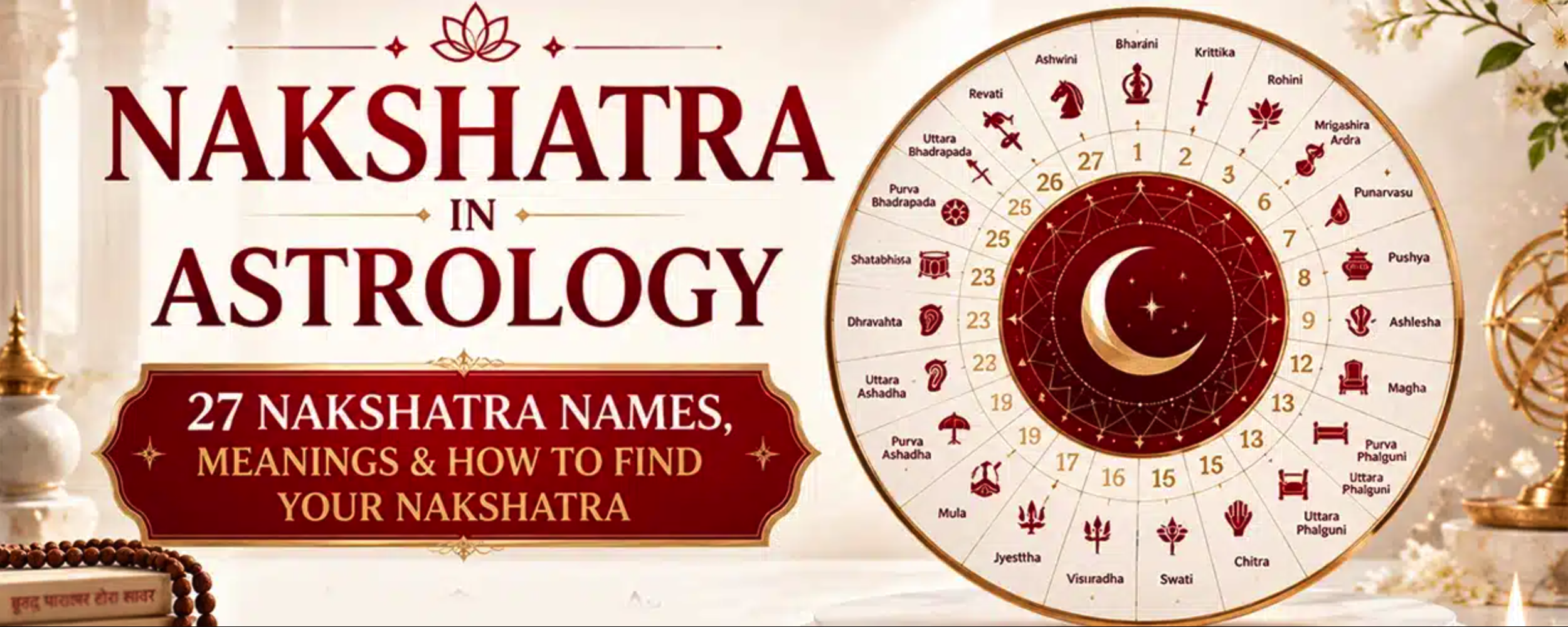
27 Nakshatras in Vedic Astrology: Names, Lords, Symbols & Meanings
Discover the 27 Nakshatras in Vedic astrology, their ruling planets, symbols, deities, characteristics and traditional meanings. Learn how your Janma Nakshatra is determined and why Nakshatra plays an important role in Kundli analysis and Jyotish.
Table of Contents
- What Is a Nakshatra?
- What Are the 27 Nakshatras?
- What Is Janma Nakshatra?
- Nakshatra Lords
- All 27 Nakshatras: Names, Lords & Symbols
- Characteristics of the 27 Nakshatras
- What Are Nakshatra Padas?
- Importance of Nakshatra in Kundli
- Nakshatra and Marriage Compatibility
- Nakshatra and Vimshottari Dasha
- Frequently Asked Questions
In Vedic astrology, Nakshatras are an important part of understanding the Moon's position and the finer details of a birth chart. They are often called the lunar mansions of Vedic astrology.
The zodiac is divided into 27 Nakshatras, with each Nakshatra covering a specific portion of the zodiac. Each one has its own traditional ruling planet, deity, symbol and characteristics.
Nakshatra is particularly important when determining a person's Janma Nakshatra, which is based on the position of the Moon at the time of birth.
Nakshatras are used in several areas of Jyotish, including Kundli analysis , marriage compatibility, planetary Dashas, Muhurta and interpretation of personality traits.
What Is a Nakshatra?
A Nakshatra is a division of the zodiac used in Vedic astrology. While the zodiac is divided into 12 Rashis, it is also divided into 27 Nakshatras.
Each Nakshatra covers approximately 13°20′ of the zodiac. Together, the 27 Nakshatras cover the complete 360-degree zodiac.
The Moon moves relatively quickly through the zodiac and spends roughly one day in a Nakshatra, making Nakshatra particularly important in Moon-based Jyotish analysis.
Each Nakshatra has several traditional attributes, including:
- Ruling planet
- Presiding deity
- Symbol
- Nature or temperament
- Four Padas
- Traditional qualities
What Are the 27 Nakshatras?
The traditional 27 Nakshatras begin with Ashwini and end with Revati.
The complete sequence is:
What Is Janma Nakshatra?
Janma Nakshatra, also called birth star, is the Nakshatra in which the Moon was located at the time of a person's birth.
To determine the Janma Nakshatra accurately, astrologers traditionally require the person's:
- Date of birth
- Exact or reasonably accurate time of birth
- Place of birth
The Moon's position can then be calculated and matched to one of the 27 Nakshatras.
Janma Nakshatra is important because it can be used as a reference point for several traditional Jyotish calculations, including Vimshottari Dasha .
Nakshatra Lords
Each Nakshatra is traditionally ruled by one of the nine planets used in the Vimshottari Dasha system.
The nine planetary rulers repeat in a specific sequence throughout the 27 Nakshatras.
| Planet | Nakshatra Rulers |
|---|---|
| Ketu | Ashwini, Magha, Mula |
| Venus | Bharani, Purva Phalguni, Purva Ashadha |
| Sun | Krittika, Uttara Phalguni, Uttara Ashadha |
| Moon | Rohini, Hasta, Shravana |
| Mars | Mrigashira, Chitra, Dhanishtha |
| Rahu | Ardra, Swati, Shatabhisha |
| Jupiter | Punarvasu, Vishakha, Purva Bhadrapada |
| Saturn | Pushya, Anuradha, Uttara Bhadrapada |
| Mercury | Ashlesha, Jyeshtha, Revati |
All 27 Nakshatras: Names, Lords and Symbols
Each Nakshatra has a unique traditional identity. The following table provides a quick overview of all 27 Nakshatras.
| No. | Nakshatra | Lord | Traditional Symbol |
|---|---|---|---|
| 1 | Ashwini | Ketu | Horse's Head |
| 2 | Bharani | Venus | Yoni |
| 3 | Krittika | Sun | Knife / Flame |
| 4 | Rohini | Moon | Chariot |
| 5 | Mrigashira | Mars | Deer's Head |
| 6 | Ardra | Rahu | Teardrop |
| 7 | Punarvasu | Jupiter | Quiver of Arrows |
| 8 | Pushya | Saturn | Flower / Udder |
| 9 | Ashlesha | Mercury | Serpent |
| 10 | Magha | Ketu | Royal Throne |
| 11 | Purva Phalguni | Venus | Hammock |
| 12 | Uttara Phalguni | Sun | Bed / Legs of Bed |
| 13 | Hasta | Moon | Hand |
| 14 | Chitra | Mars | Bright Jewel |
| 15 | Swati | Rahu | Young Shoot / Sword |
| 16 | Vishakha | Jupiter | Triumphal Arch |
| 17 | Anuradha | Saturn | Lotus |
| 18 | Jyeshtha | Mercury | Earring |
| 19 | Mula | Ketu | Roots |
| 20 | Purva Ashadha | Venus | Fan |
| 21 | Uttara Ashadha | Sun | Elephant Tusk |
| 22 | Shravana | Moon | Ear |
| 23 | Dhanishtha | Mars | Drum |
| 24 | Shatabhisha | Rahu | Circle |
| 25 | Purva Bhadrapada | Jupiter | Sword / Front Legs |
| 26 | Uttara Bhadrapada | Saturn | Back Legs of Bed |
| 27 | Revati | Mercury | Fish |
Characteristics of the 27 Nakshatras
1. Ashwini
Ashwini is the first Nakshatra and is traditionally associated with speed, initiative, healing and beginnings. Its symbolism is connected with the Ashwini Kumaras, traditionally described as divine healers.
2. Bharani
Bharani is traditionally associated with responsibility, transformation, creativity and the ability to handle significant responsibilities.
3. Krittika
Krittika is traditionally associated with purification, determination, sharpness and transformation. Its symbolism includes fire and cutting.
4. Rohini
Rohini is traditionally associated with creativity, beauty, growth, attraction and material development.
5. Mrigashira
Mrigashira is associated with curiosity, exploration, searching and intellectual interest.
6. Ardra
Ardra is traditionally connected with transformation, intensity, emotional depth and the process of change.
7. Punarvasu
Punarvasu is traditionally associated with renewal, return, optimism, restoration and the ability to begin again.
8. Pushya
Pushya is traditionally associated with nourishment, protection, learning, discipline and spiritual development.
9. Ashlesha
Ashlesha is traditionally associated with depth, intuition, perception, strategy and the symbolic qualities of the serpent.
10. Magha
Magha is associated with ancestry, tradition, authority, heritage and respect for one's roots.
11. Purva Phalguni
Purva Phalguni is traditionally associated with creativity, pleasure, relationships, relaxation and enjoyment of life.
12. Uttara Phalguni
Uttara Phalguni is associated with friendship, agreements, responsibility, support and long-term partnerships.
13. Hasta
Hasta is traditionally associated with skill, craftsmanship, intelligence, organization and the ability to create or accomplish things through one's hands.
14. Chitra
Chitra is associated with creativity, beauty, design, individuality and the desire to create something distinctive.
15. Swati
Swati is traditionally associated with independence, flexibility, movement, learning and individual growth.
16. Vishakha
Vishakha is associated with determination, ambition, focus and the pursuit of goals.
17. Anuradha
Anuradha is traditionally associated with friendship, devotion, cooperation, discipline and loyalty.
18. Jyeshtha
Jyeshtha is associated with seniority, responsibility, protection, authority and experience.
19. Mula
Mula is traditionally associated with roots, investigation, transformation and searching for fundamental truth.
20. Purva Ashadha
Purva Ashadha is associated with confidence, enthusiasm, strength, determination and the desire to achieve victory.
21. Uttara Ashadha
Uttara Ashadha is traditionally associated with leadership, perseverance, responsibility and lasting achievement.
22. Shravana
Shravana is associated with listening, learning, communication, knowledge and the transmission of information.
23. Dhanishtha
Dhanishtha is traditionally associated with rhythm, music, ambition, wealth, organization and social achievement.
24. Shatabhisha
Shatabhisha is associated with healing, independence, research, mystery and unconventional thinking.
25. Purva Bhadrapada
Purva Bhadrapada is traditionally associated with transformation, idealism, intensity and deeper philosophical thinking.
26. Uttara Bhadrapada
Uttara Bhadrapada is associated with wisdom, patience, stability, depth and inner development.
27. Revati
Revati is the final Nakshatra and is traditionally associated with nourishment, protection, travel, completion and guidance.
What Are Nakshatra Padas?
Each Nakshatra is divided into four Padas. Therefore, the 27 Nakshatras contain a total of 108 Padas.
Each Pada covers 3 degrees and 20 minutes of the zodiac.
Padas are important because they provide additional detail when interpreting the position of a planet within a Nakshatra.
The Pada can also influence the Navamsa placement associated with a particular planetary position.
Importance of Nakshatra in Kundli
Nakshatra plays an important role in traditional Kundli interpretation. While Rashi provides one level of zodiac analysis, Nakshatra can provide additional detail about the Moon and other planets.
Nakshatra may be considered when examining:
- Personality tendencies
- Moon's position
- Planetary Dashas
- Marriage compatibility
- Muhurta or auspicious timing
- Planetary strength and interpretation
- Traditional remedies
A complete interpretation should consider the entire birth chart rather than relying on Nakshatra alone.
Nakshatra and Marriage Compatibility
Nakshatras are traditionally used in Vedic marriage matching systems. One well-known approach is Ashtakoota or Guna Milan, which evaluates several compatibility factors between the birth charts of two people.
The Moon's Nakshatra is particularly important in this traditional compatibility system.
Factors may include considerations related to temperament, health, attraction, planetary friendship and other traditional compatibility categories.
However, Nakshatra matching is only one component of a broader traditional Kundli matching process. The complete charts may also be examined.
Nakshatra and Vimshottari Dasha
Nakshatra has a particularly important role in the Vimshottari Dasha system.
The Nakshatra occupied by the Moon at birth determines the starting planetary period in the traditional Vimshottari Dasha calculation.
Each Nakshatra is ruled by one of the nine planets used in the Vimshottari system. The remaining portion of the Nakshatra at birth is used to determine the balance of the first Dasha.
This makes the birth Nakshatra particularly significant for traditional timing techniques in Jyotish.
Frequently Asked Questions About Nakshatra
What is a Nakshatra?
A Nakshatra is one of the 27 divisions of the zodiac used in Vedic astrology. Each Nakshatra covers approximately 13 degrees and 20 minutes.
How many Nakshatras are there?
There are traditionally 27 Nakshatras in Vedic astrology. Each Nakshatra is further divided into four Padas.
What is Janma Nakshatra?
Janma Nakshatra is the Nakshatra occupied by the Moon at the time of birth. It is also commonly called the birth star.
Which Nakshatra is considered the first?
Ashwini is traditionally considered the first Nakshatra in the sequence of the 27 Nakshatras.
Which Nakshatra is the last?
Revati is traditionally the 27th and final Nakshatra.
How many Padas are in each Nakshatra?
Each Nakshatra contains four Padas. With 27 Nakshatras, there are traditionally 108 Padas in total.
Why is Nakshatra important in Kundli?
Nakshatra provides additional information about planetary positions, especially the Moon. It is traditionally used in Kundli interpretation, marriage matching, Dasha calculations and Muhurta.
Can I find my Nakshatra from my birth details?
Yes. Your date, time and place of birth can be used to calculate the Moon's position and determine your Janma Nakshatra.
Explore More Astrology Topics
Continue learning about Vedic astrology with these AstrologyHubs guides:
Need personal guidance?
Connect with our expert Pandits for a detailed reading based on your Kundli.